Tutorial
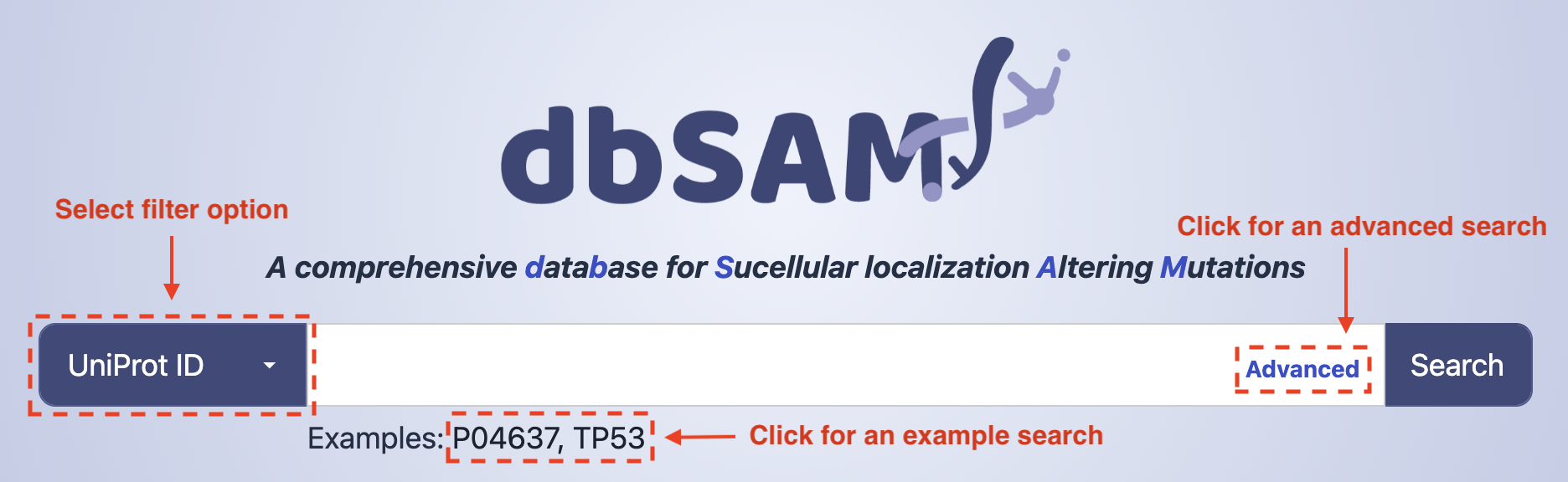
You can use the "Search" button to find variants by Uniprot ID, gene name or protein name. You can also click example links for an example search.
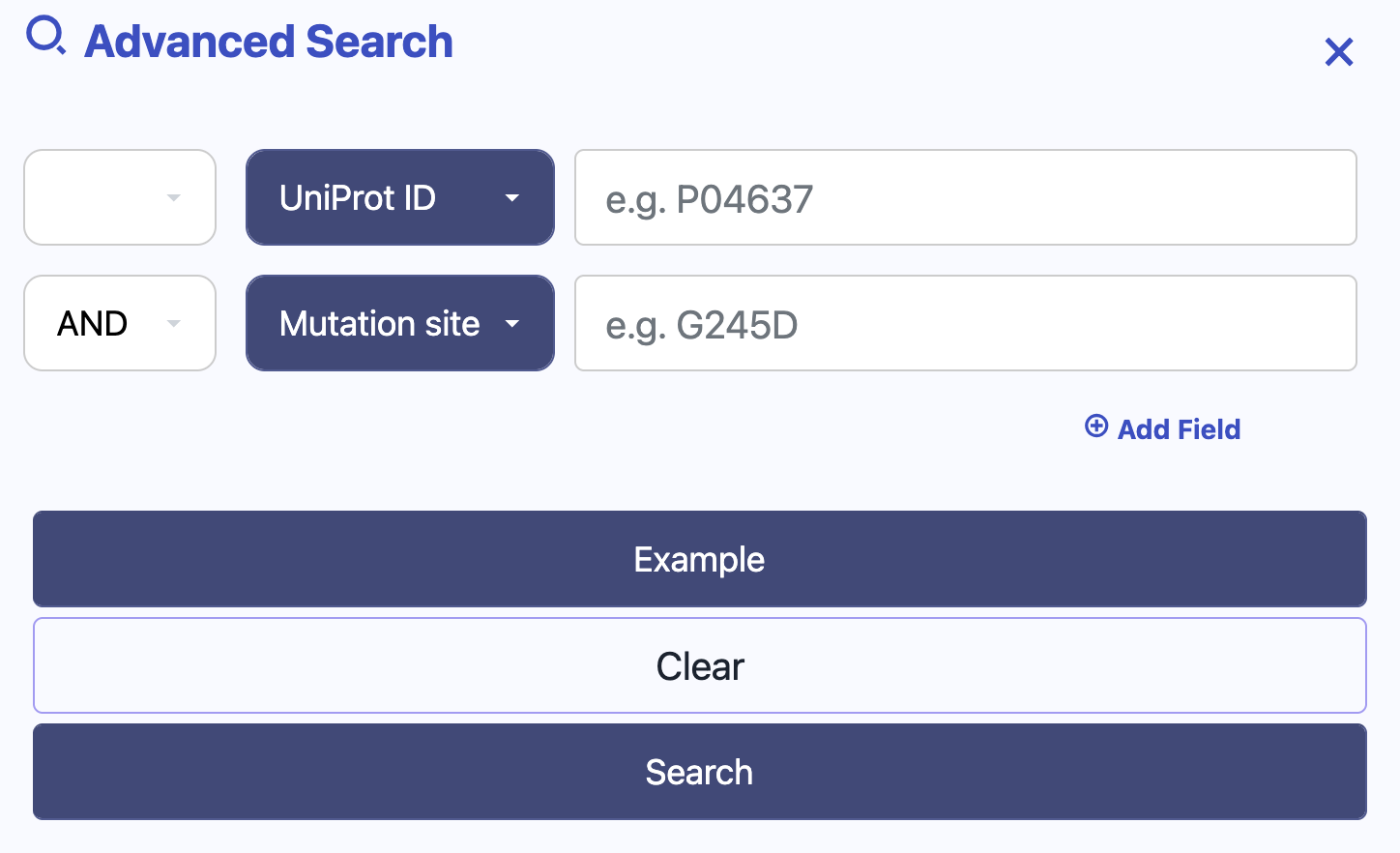
dbSAM provides an advanced search engine for precise queries, and you can choose the options of interest to search.
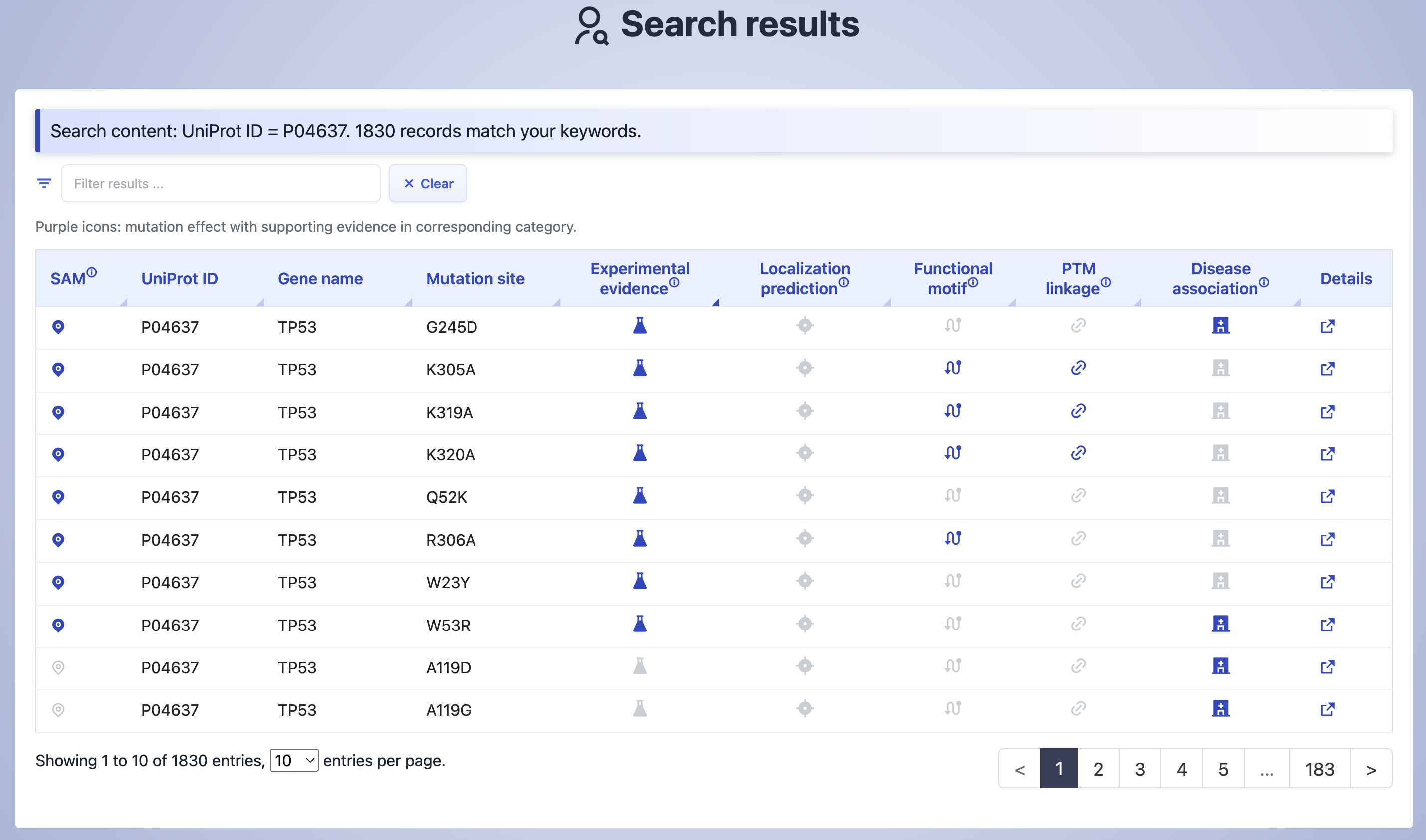
The "Search results" page is organized in evidence tiers. The table shows one row per variant with icons for four evidence types (Experimental evidence, Localization prediction, Functional motif, PTM linkage). Below that, Experimental evidence lists literature-curated records; Localization prediction shows computational localization changes; Functional motif shows functional motif evidence; PTM linkage shows PTM linkage evidence. Disease association shows disease annotation evidence. Purple icons indicates mutation effect with supporting evidence in corresponding category. You can click any icon to open the detail page.
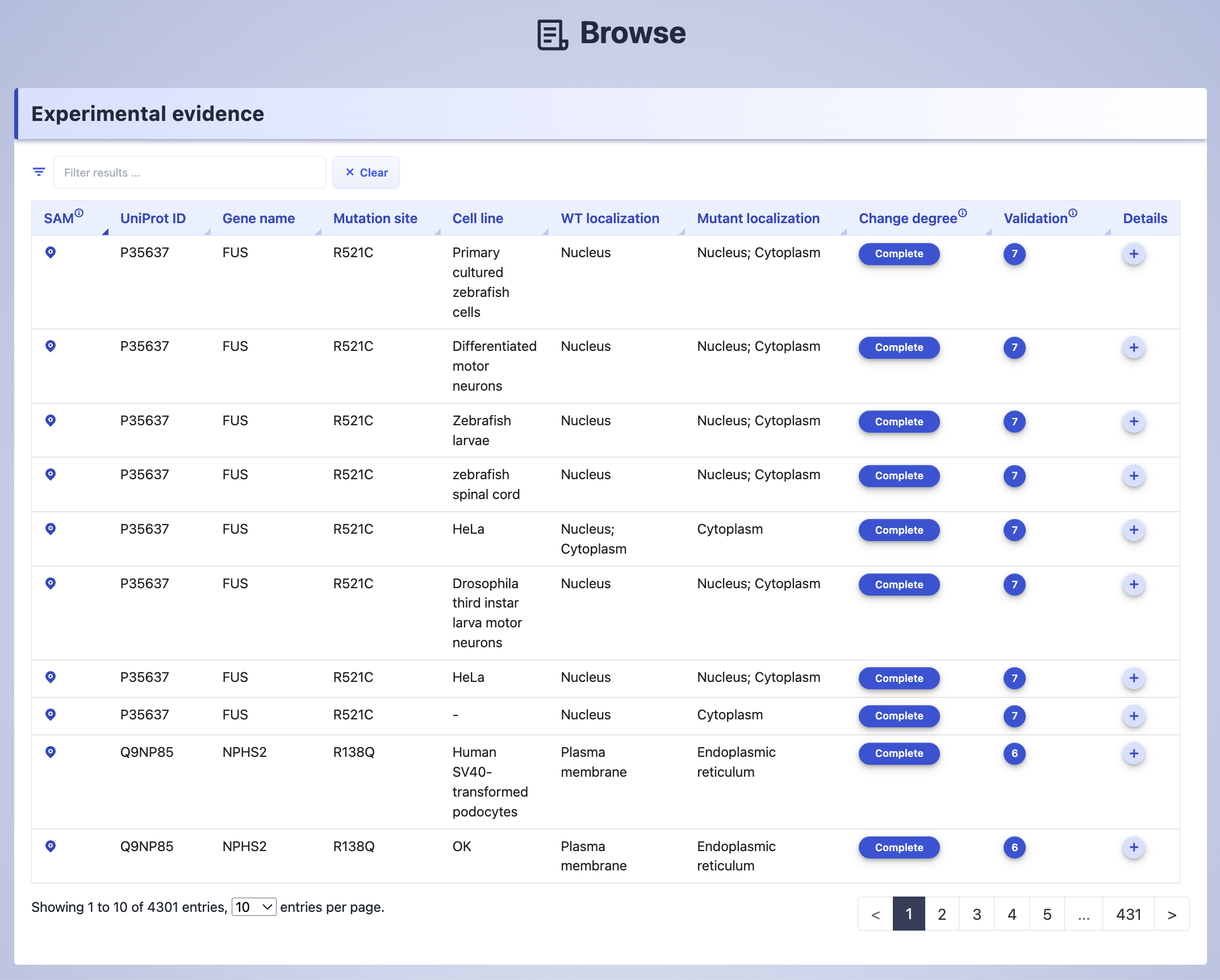
The "Browse" page provides a comprehensive overview of the database, allowing users to explore experimentally validated SAMs and proteintial SAMs.
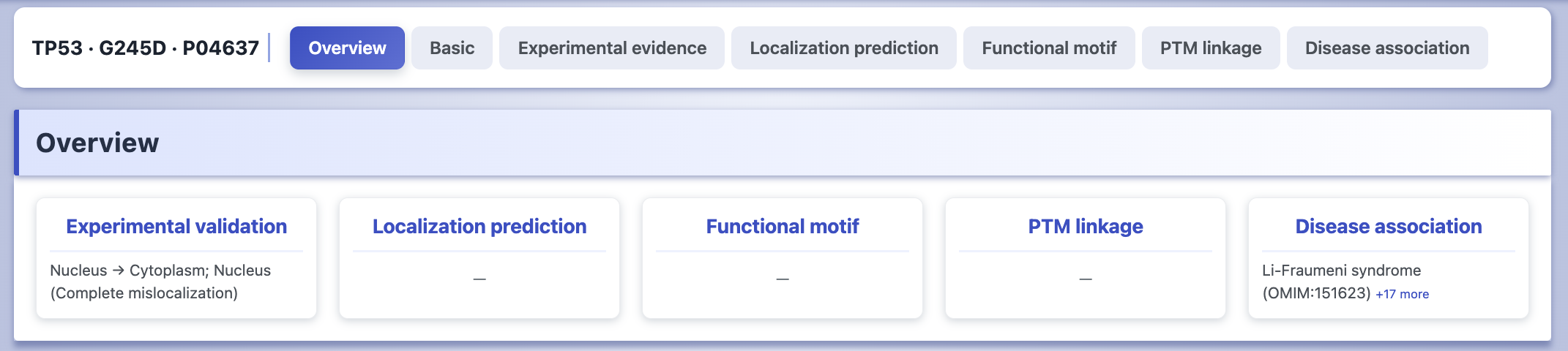
The "Detailed information" contains seven sections: Overview, Basic information, Experimental evidence, Localization prediction, Functional motif, PTM linkage and Disease association.
(1) Overview
The evidence summary of the SAM.
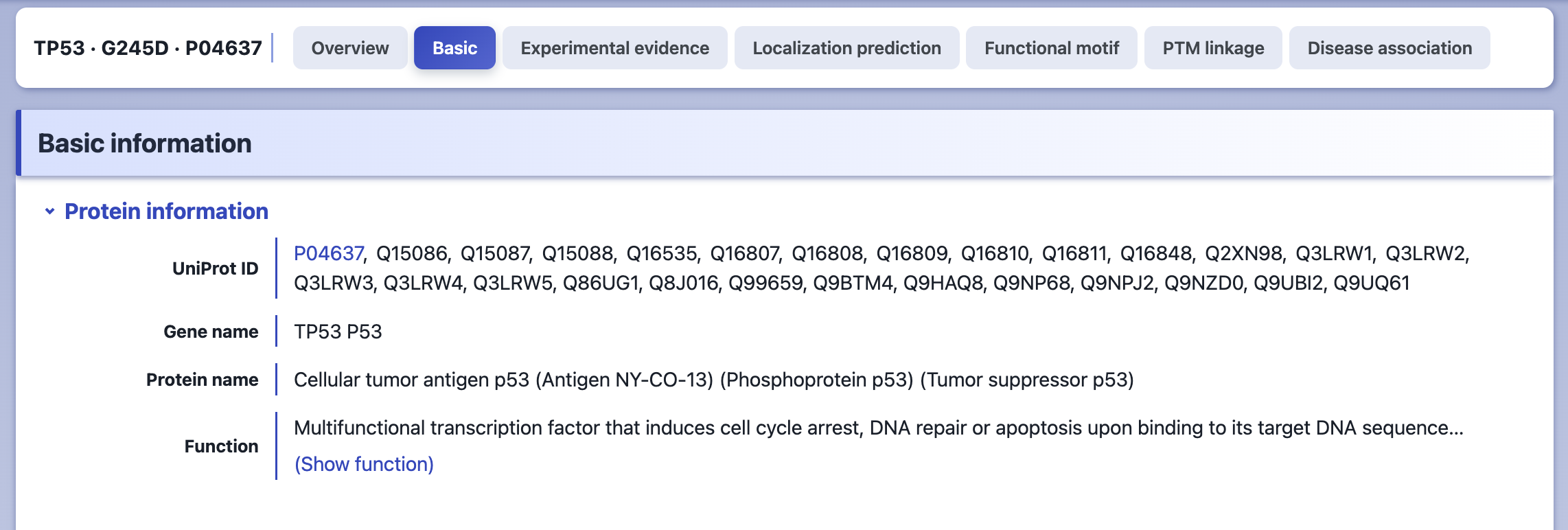
(2) Basic information
Protein information.
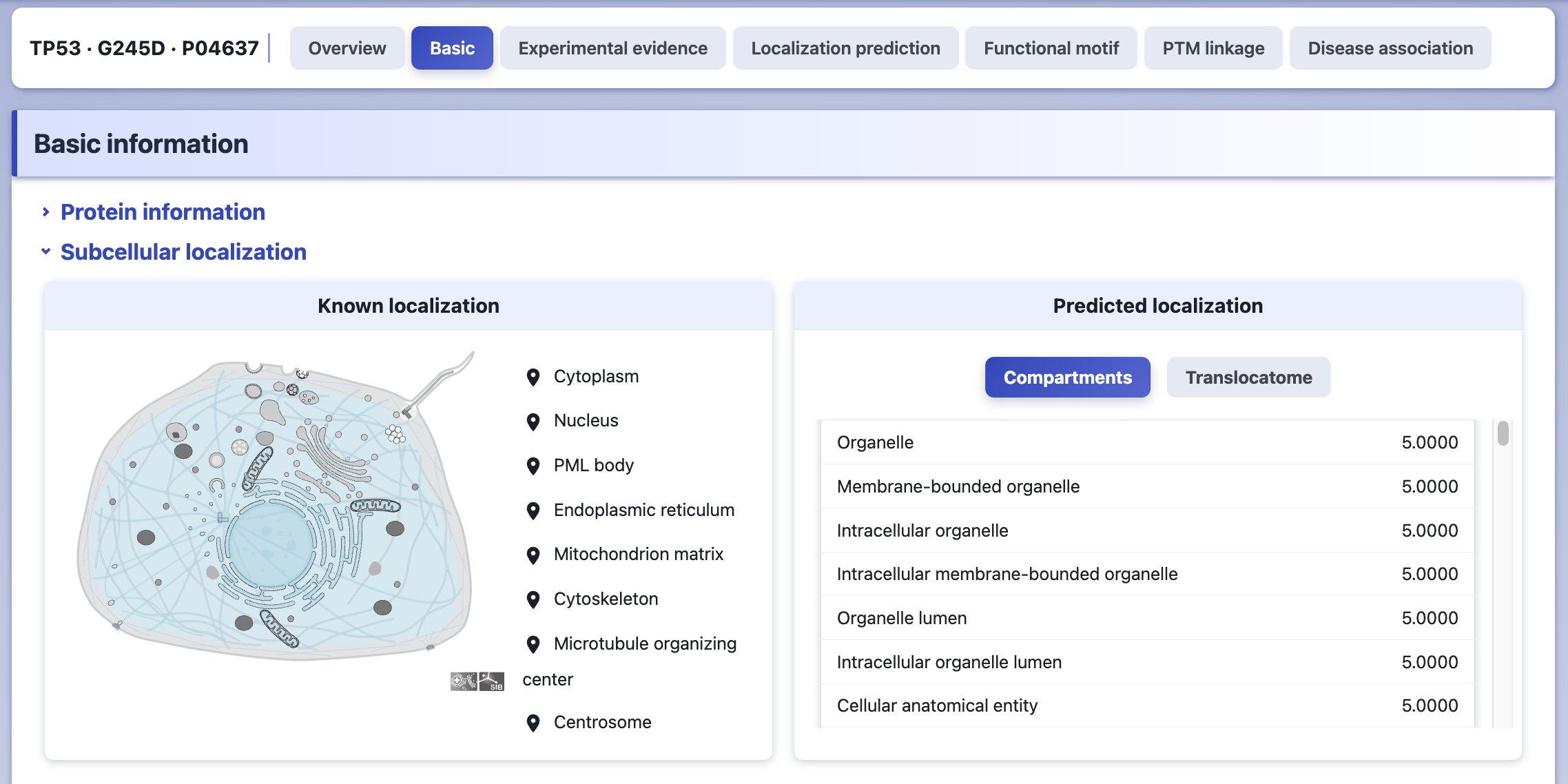
Subcellular localization.
Physicochemical property.
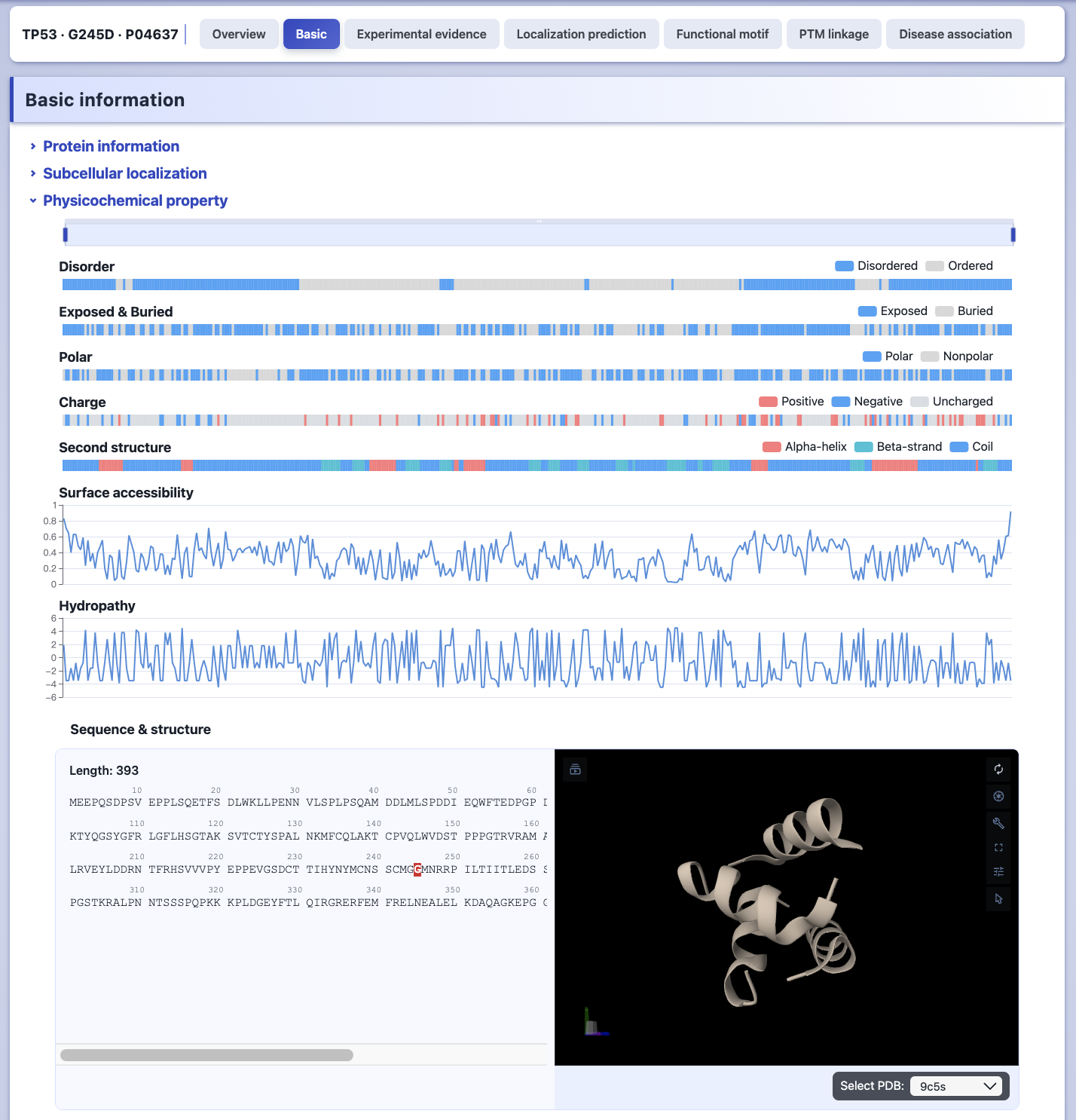
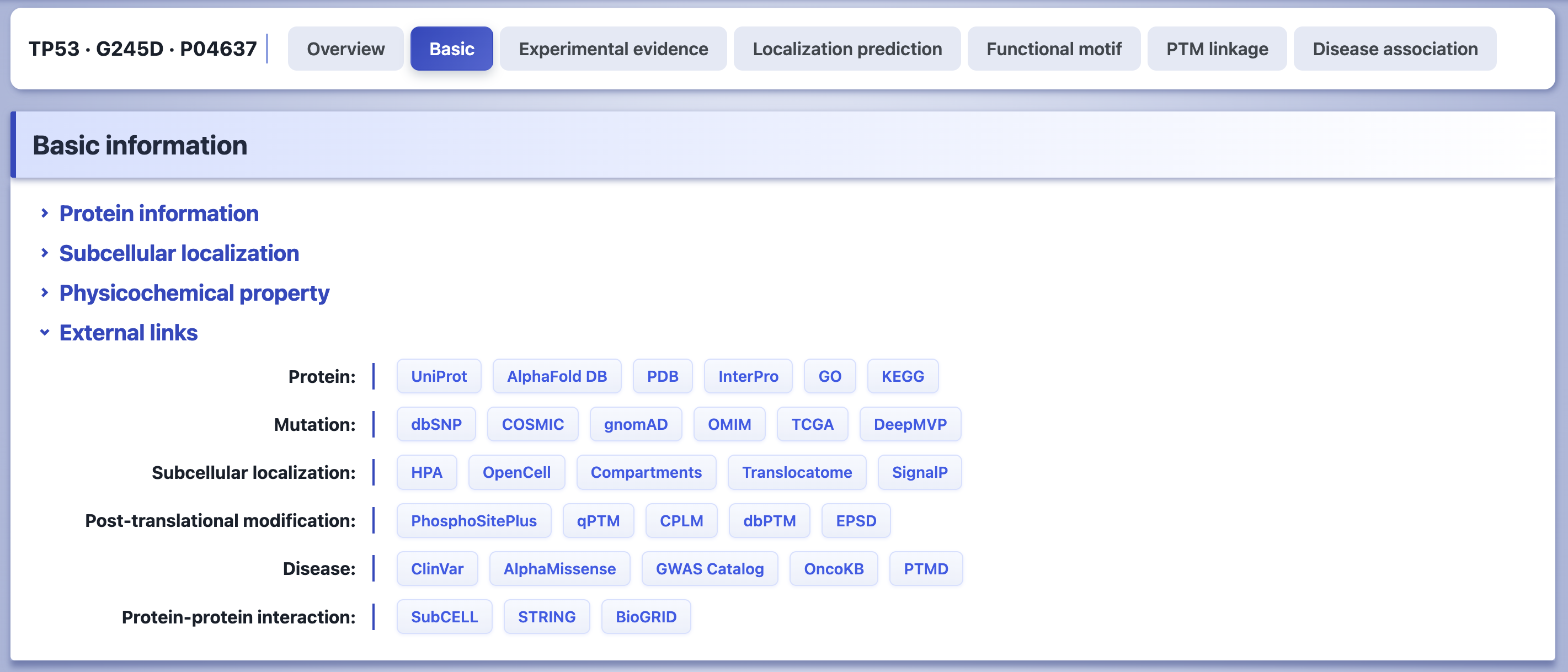
External links.
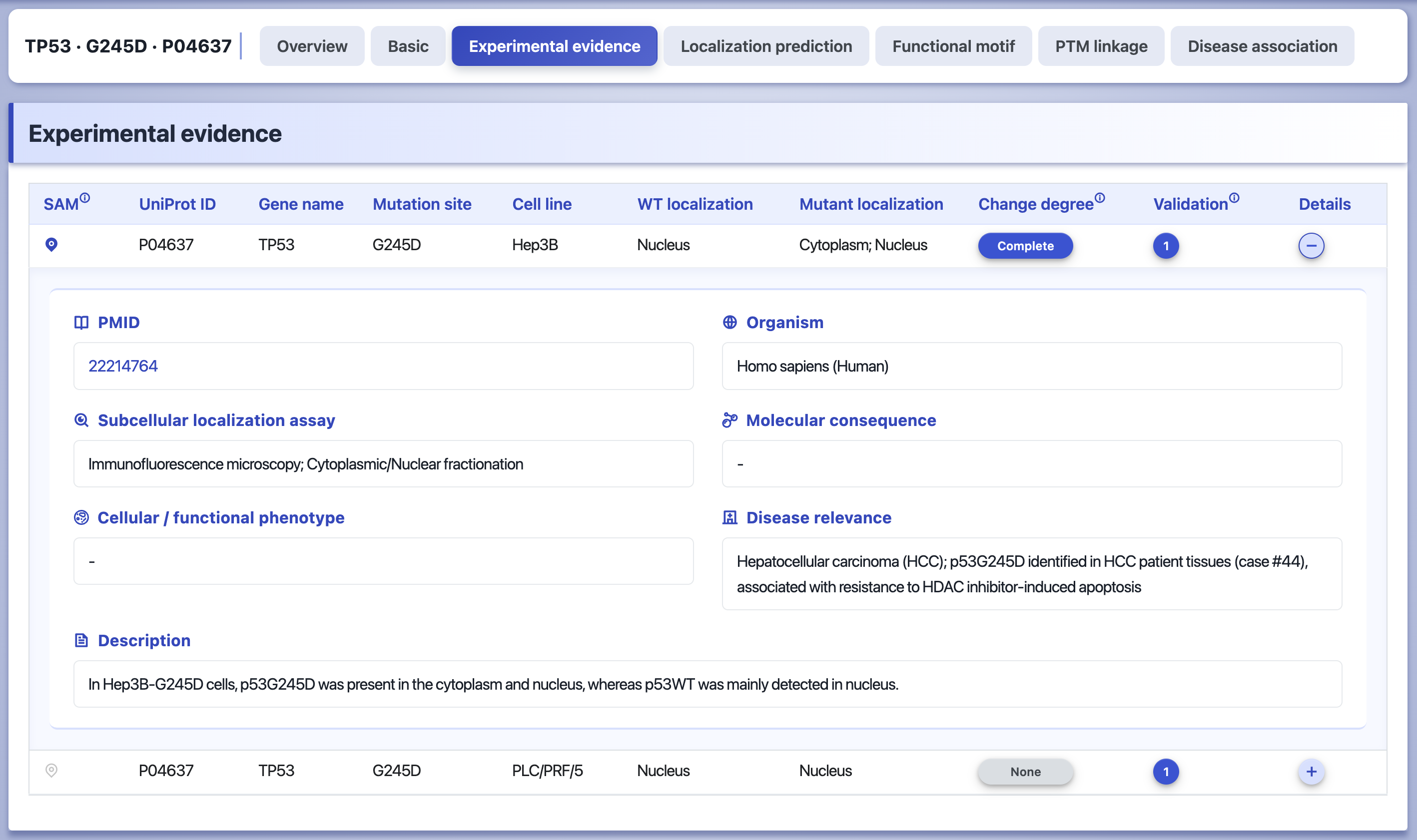
(3) Experimental evidence
We provide users with detailed experimentally relevant information, including cell line, subcellular localization assay, change degree, molecular consequence, cellular and functional phenotypes, as well as disease relevance and detailed experimental descriptions.
(4) Localization prediction
We used two models to predict the localization of the protein: pSAM and ProtGPS. The localization prediction results are shown in the table, including localization probabilities and trajectory, and localization-determining region.
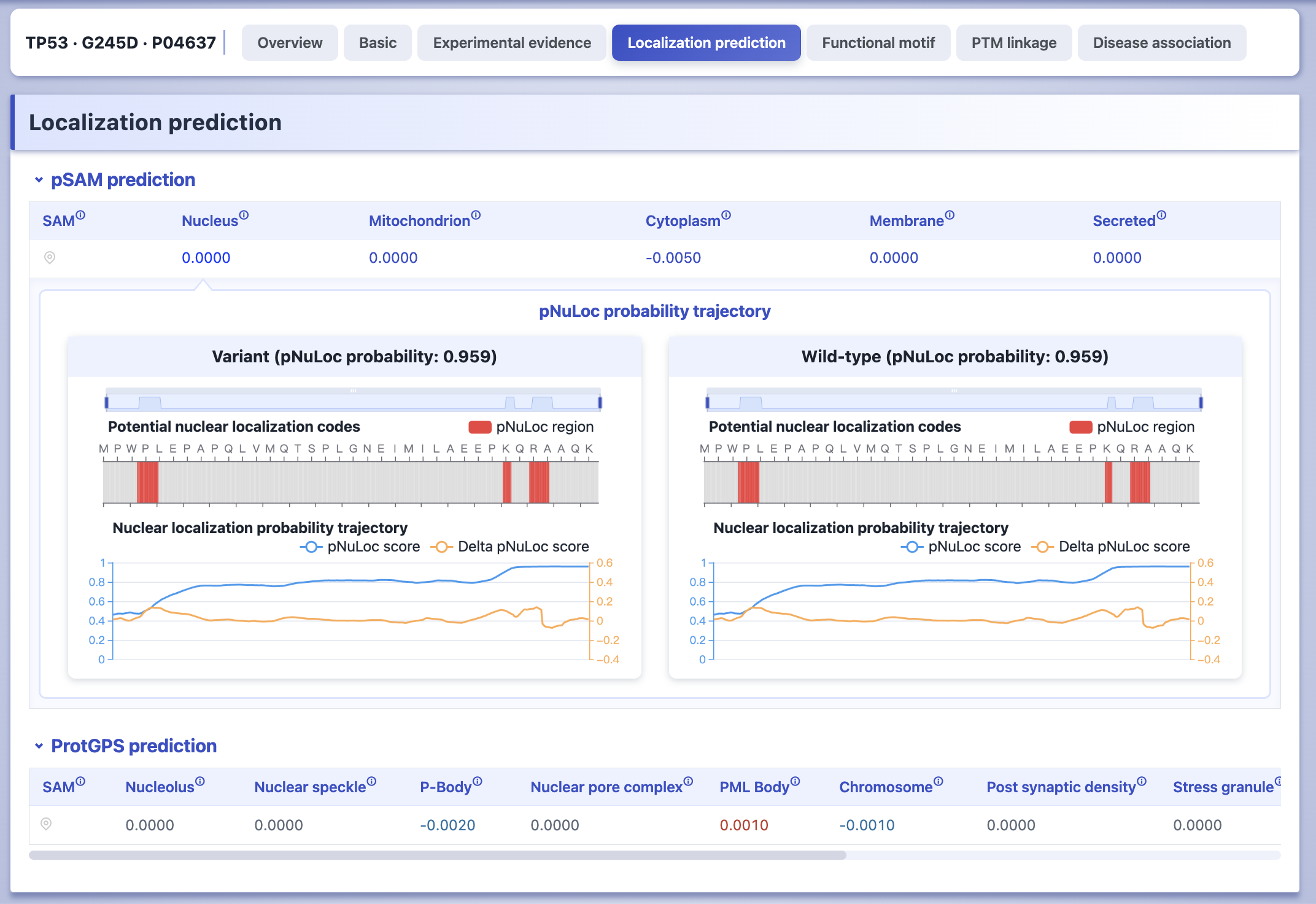
Explanation:
pNuLoC score- The nuclear localization probability predicted by pSAM.pNuLoC Region- The determinants for nuclear localization (DNL) predicted by pSAM.Poteintial nuclear localization codes- The determiants for nuclear localization predicted by pSAM.Nuclear localization probability trajectory- The nuclear localization probability trajectory predicted by pSAM, see the paper for details.
(5) Functional motif
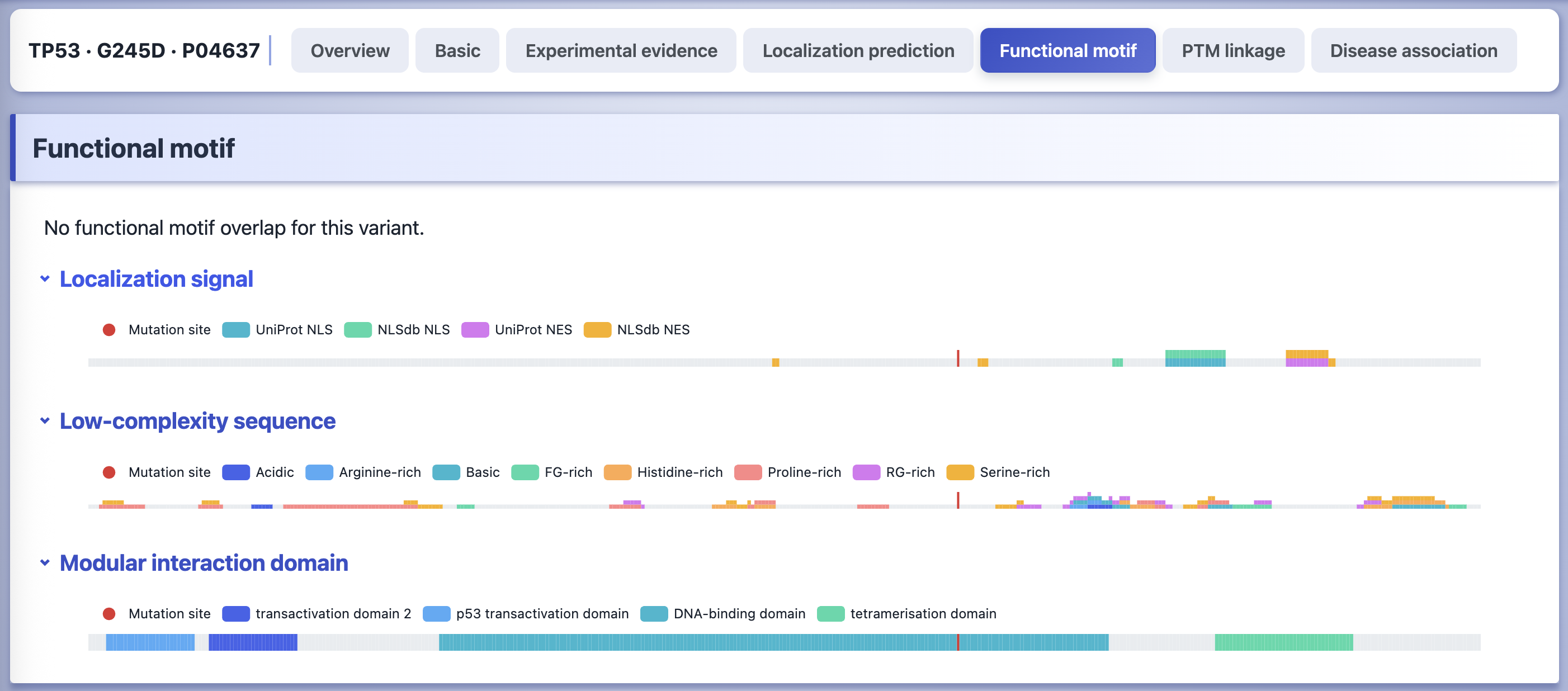
The functional motifs of the protein are provided, including localization signals, LCSs and MIDs of condensate-forming proteins, together with the positional relationship between each variant and these functional motifs.
(6) PTM linkage
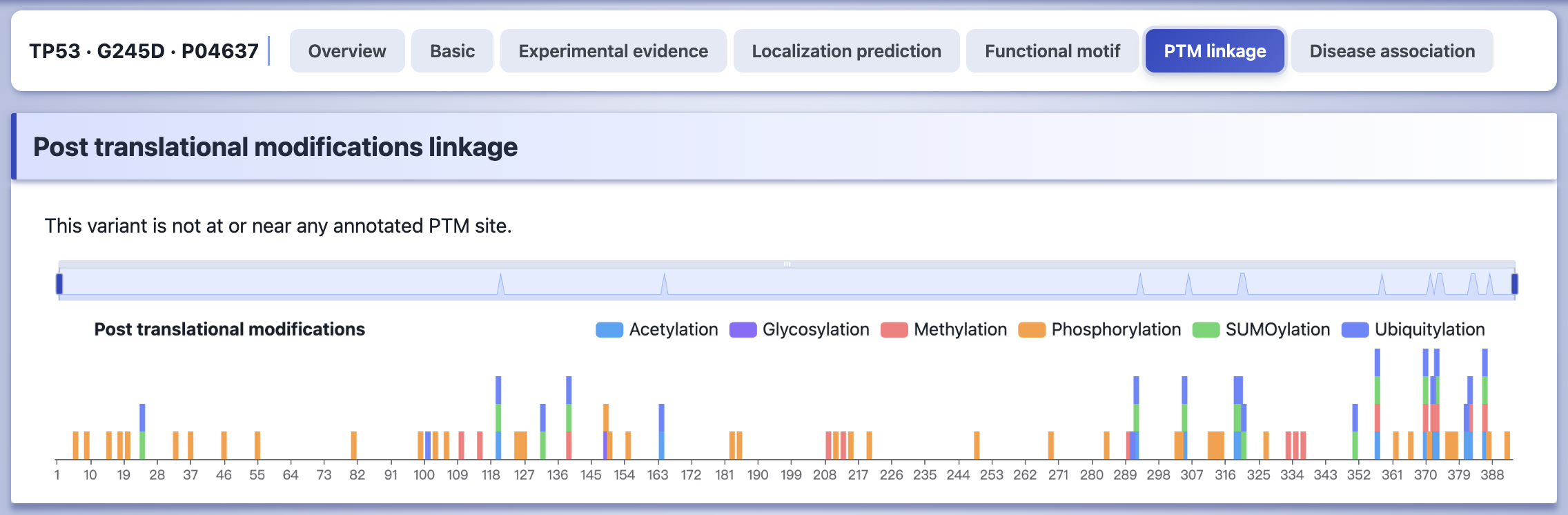
The PTM linkage listing known PTM sites and whether the variant disrupts these modifications.
(7) Disease association
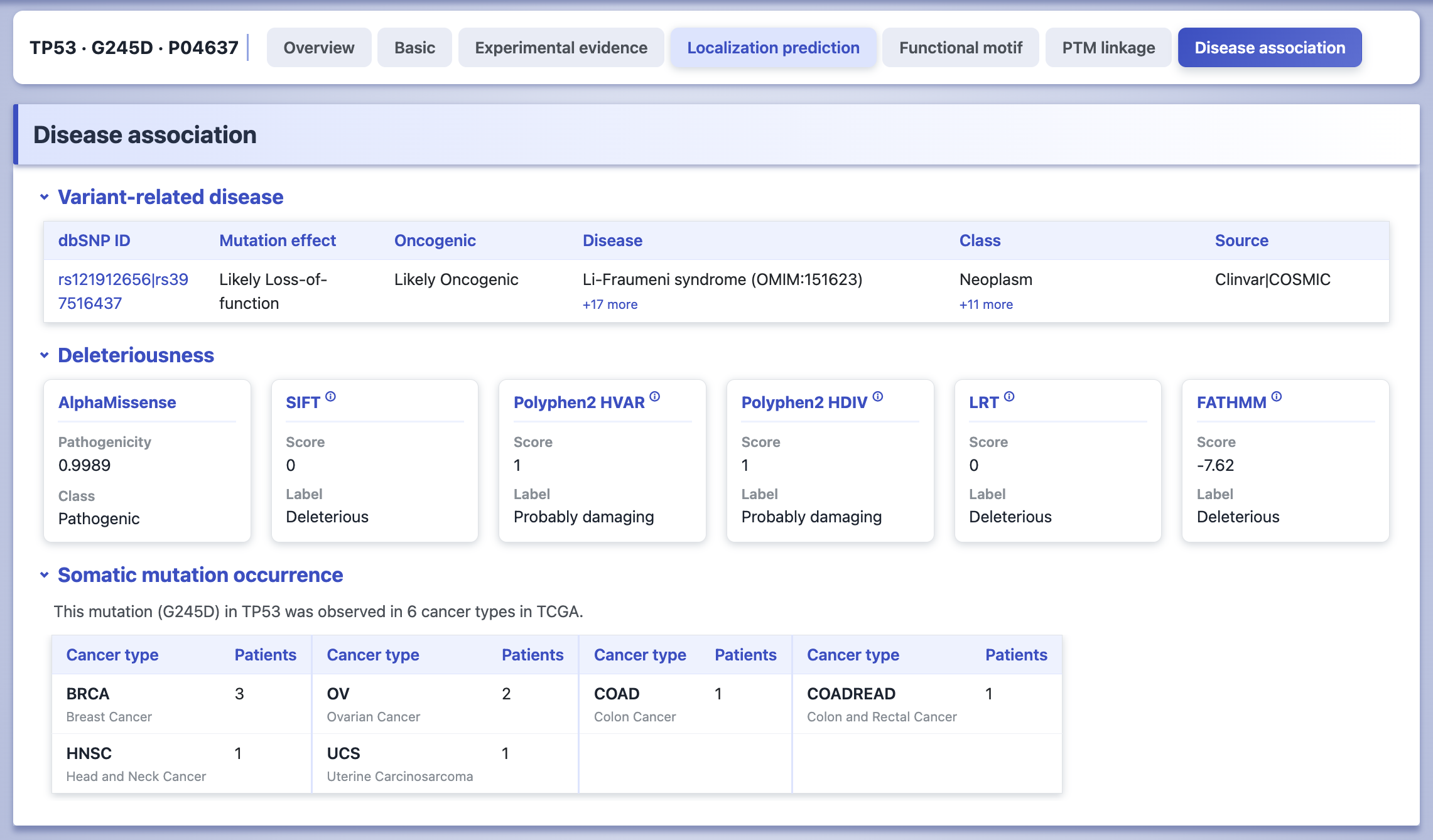
The disease association is provided, including clinical pathogenicity, related phenotypes, variant deleteriousness scores, and somatic mutation occurrence.
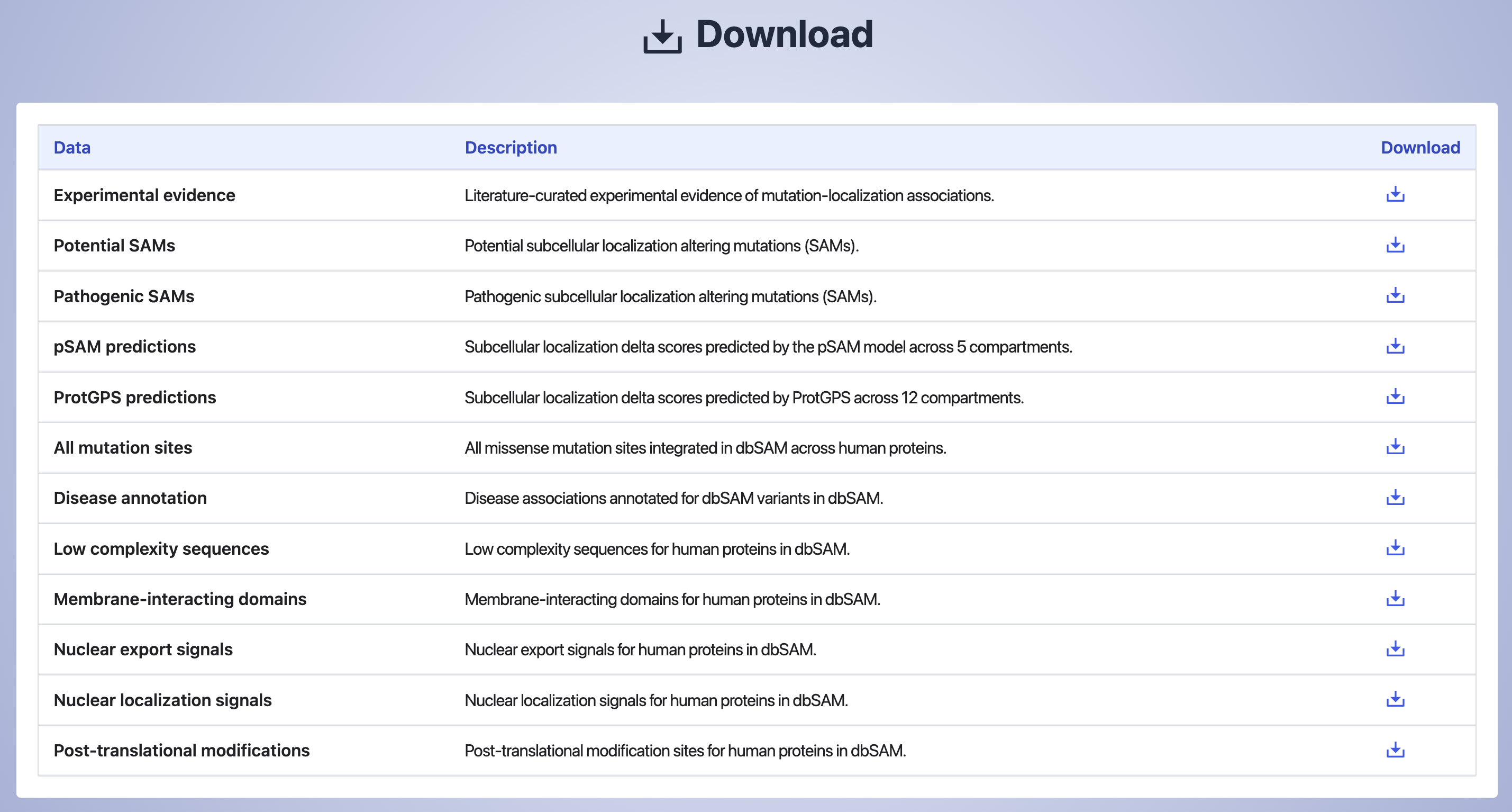
You can select the data of interest and click the 'Download' button to download the data.
Please leave your contact information, and we will email you a download link within 3 minutes.